Top 10 Profound Alternatives For Generative Engine Optimization (GEO) Success
January 5, 2026

Afrah Fazlulhaq
The surge in AI visibility analytics has flooded the market with GEO tools. While many are building visibility platforms, only a few deliver real AEO intelligence, and those few are now pushing past expectations and challenging established leaders.
Profound used to be the go-to platform for measuring AI visibility in 2025, but things have changed in 2026. GEO tools for Enterprise brands are emerging.
In this guide, we explore the top 10 Profound alternatives like BrandRadar.ai that help teams measure and improve their presence in generative search environments.
What to Look for in a Profound Alternative in 2026?
Before we look at specific tools for answer optimization, it’s important to define what a strong Profound alternative actually does:
- Multimodel AI visibility tracking – Ability to monitor brand visibility across multiple LLM search engines like ChatGPT, Perplexity, Gemini and more.
- Prompt-level insights – Not just tracking a few keywords but understanding how various prompts influence visibility.
- Entity & citation intelligence – Grasping how AI interprets brands, entities, and relationships.
- Competitive benchmarking – Seeing where you stand relative to competitors.
- Actionable recommendations with analytics – Clear direction on what to fix or optimize next with customizable analytics.
- Cross-Platform Content Strategy & Optimization - Building the right content strategy, optimizing it for AI and search to drive results.
Many tools position themselves as “AI visibility” platforms, but not all deliver across these pillars. This list includes platforms that solve part, or all, of the Generative Engine Optimization challenge. Our goal isn’t just to list them but to highlight where strategic marketers should focus their attention.
Top 10 Best Alternatives for Profound
1. BrandRadar.ai - Best Overall Alternative to Profound for AEO/GEO
What it does
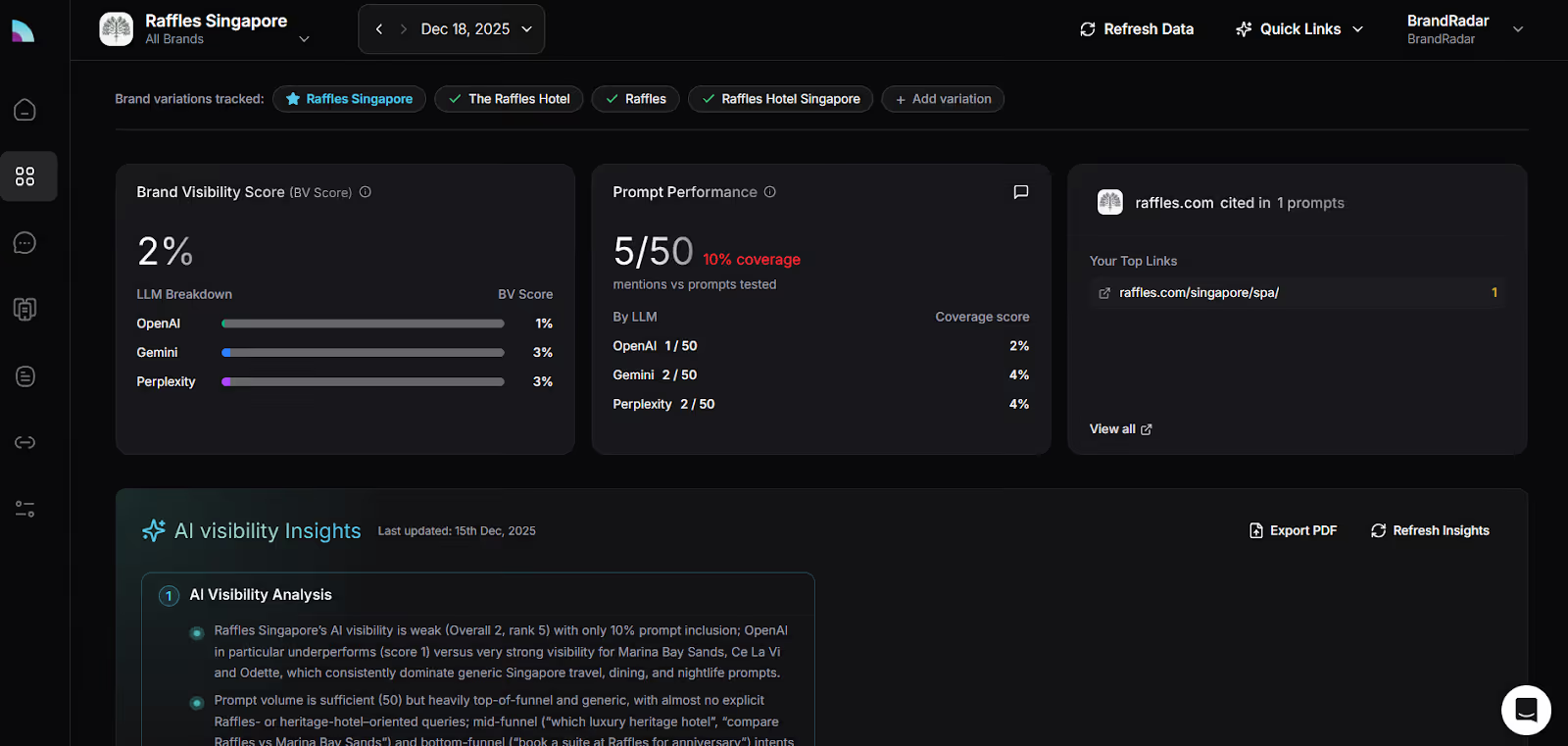
BrandRadar is a dedicated AI visibility intelligence platform built specifically for Generative Engine Optimization. It tracks how brands appear inside AI-generated answers across ChatGPT, Gemini, Perplexity, and other LLM-driven systems, at the prompt, topic, market, and competitor level.
Key capabilities
- Prompt-level visibility tracking (not just brand mentions)
- Entity interpretation and consistency analysis
- Citation frequency and sentiment context
- Cross-model and cross-region comparisons
- Competitive benchmarking by topic and intent
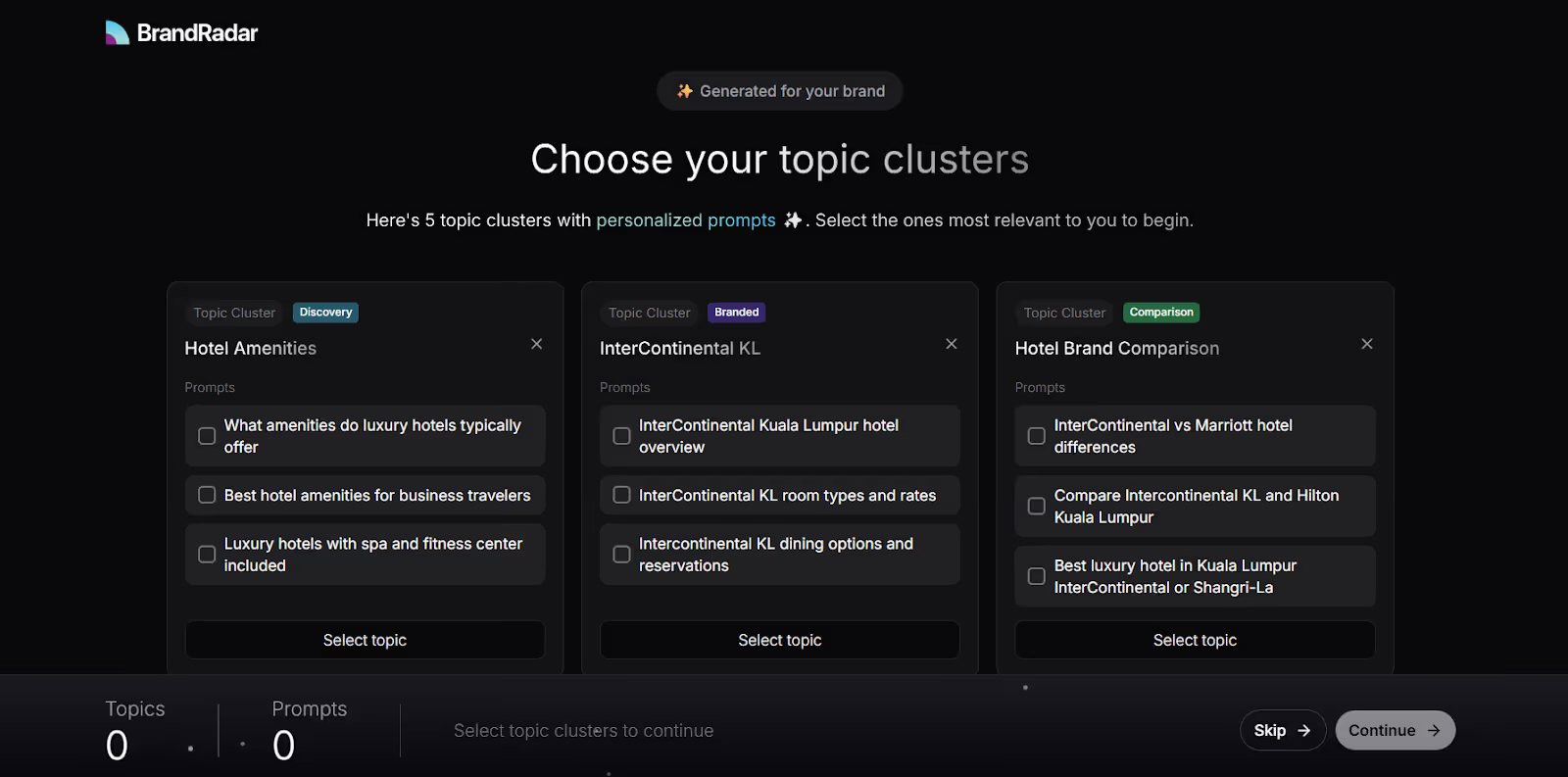
- Actionable insights tied to real prompts people ask
- Cross-platform content optimization
- Optional service: SEO management
Pricing & access
BrandRadar offers self-serve platform access starting at $49/month, with enterprise and agency tiers for multi-brand, multi-region teams. This makes it significantly more accessible than Profound’s enterprise-first pricing model, while still offering depth at scale. In addition, brands can also choose to get SEO services alongside GEO to ensure dual-infrastructure success. BrandRadar.ai is the most affordable AEO tool alternative for Profound.
How BrandRadar.ai compares to Profound
While Profound is strong in AI visibility measurement, BrandRadar goes further by:
- Providing broader prompt coverage instead of sampled prompts
- Adding entity-level interpretation, not just brand presence
- Offering clearer competitive context tied to real buying intent
- Supporting both self-serve teams and managed execution, not only large enterprises
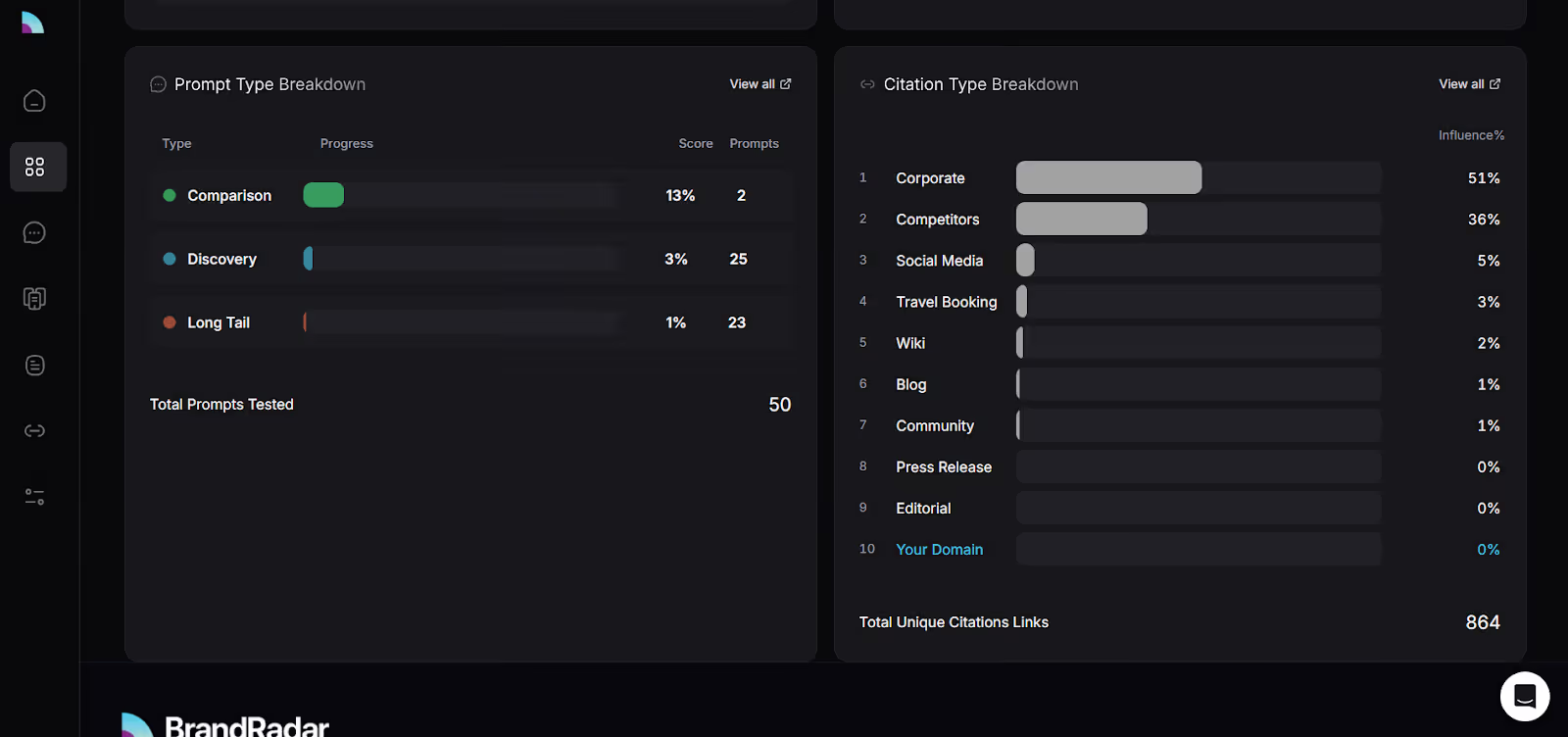
In short, Profound tells you where you appear. BrandRadar helps you understand why you appear, and how to improve it with strategic recommendations, content strategy and optimization tips.
Best for
Marketing leaders who want practical AEO intelligence they can act on immediately, without committing to heavyweight enterprise contracts. Or Brand owners who want to improve GEO alongside SEO.
Among all Profound alternatives, BrandRadar is the only platform combining prompt-level AI visibility, entity intelligence, competitive benchmarking, and optional SEO execution in one system.
2. Peec.ai - AI Visibility Monitoring & Sentiment Tracking
What it does
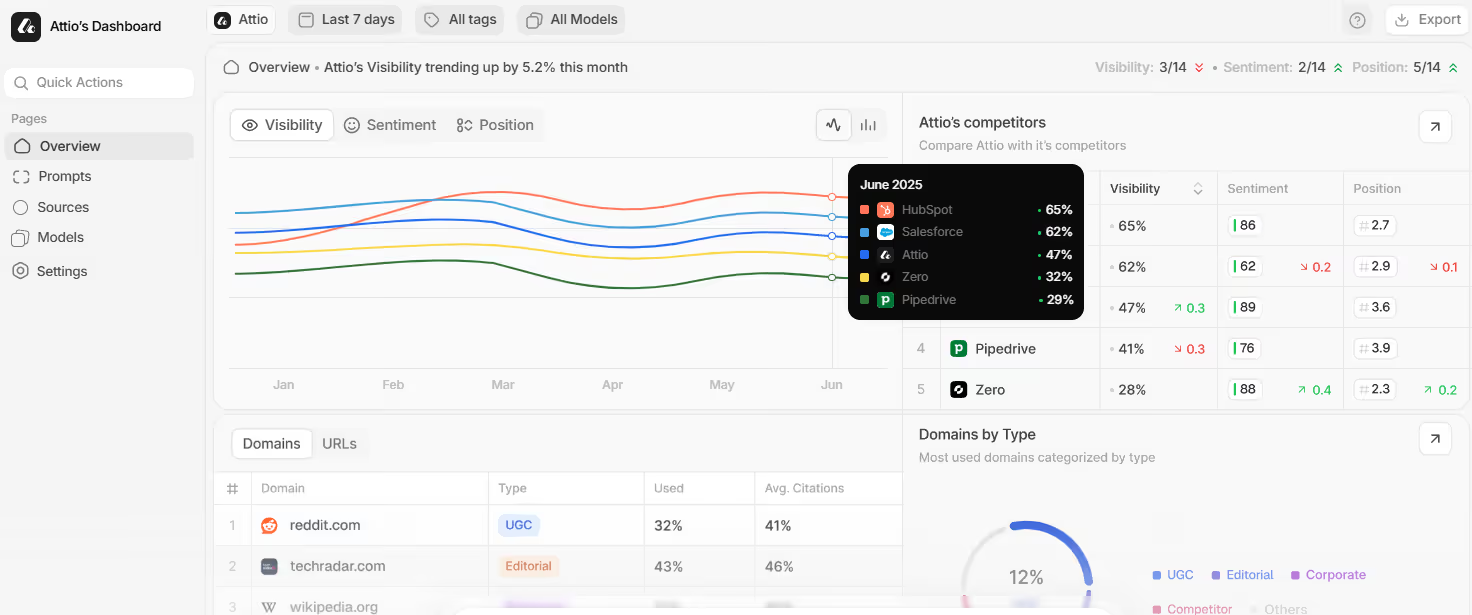
Peec.ai focuses on tracking brand visibility, position, and sentiment across AI systems like ChatGPT, Claude, and Perplexity. It provides dashboards that show whether a brand is present and how it is framed.
Key capabilities
- AI brand visibility tracking
- Sentiment analysis in AI answers
- Prompt-level monitoring (limited depth)
- Exportable reports for stakeholders
Pricing
Starting at 89€/month (104$), Peec typically positions itself for mid-market and enterprise teams, with pricing higher than entry-level GEO tools.
How peec.ai compares to Profound
Compared to Profound, Peec offers:
- Easier onboarding and simpler dashboards
- Less depth in entity modeling and optimization logic
Peec is closer to Profound than most tools in terms of measurement, but it still leans more toward monitoring than optimization.
Where it falls short
- Limited guidance on what to fix
- No deep entity architecture or authority modeling
- Less emphasis on competitive intent mapping
Best for
Teams that want ongoing AI visibility monitoring and sentiment awareness, but don’t need a full GEO intelligence stack.
3. Athena HQ - Prompt Monitoring & Competitive Snapshots
What it does
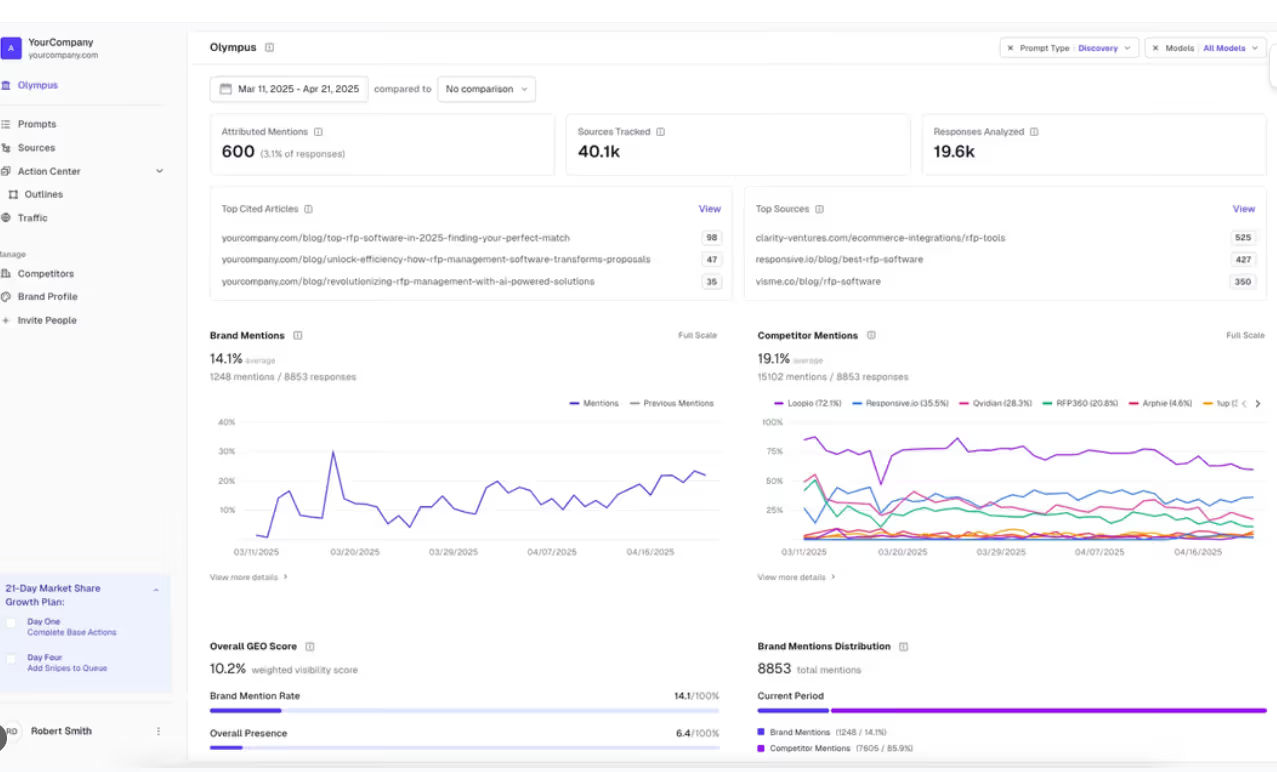
Athena HQ helps teams track how their brand appears across AI-generated answers and compare that visibility against competitors for selected prompts.
Key capabilities
- Prompt-level tracking
- Competitive visibility comparisons
- High-level AI answer monitoring
Pricing
Starting at 95$/month, Athena HQ is typically positioned as a specialist AI search tool for Enterprise and Agencies.
How it compares to Profound
Athena overlaps with Profound in prompt monitoring and competitor comparison, but lacks:
- Deep entity interpretation
- Market-level aggregation
- Clear optimization pathways
It’s much similar to peec.ai. It answers “Are we showing up?” but not “How do we systematically improve this?”
Best for
Teams and agencies that want quick competitive snapshots across AI answers without committing to a broader GEO program.
4. Semrush AI SEO - SEO Platform with Emerging AI Signals
What it does
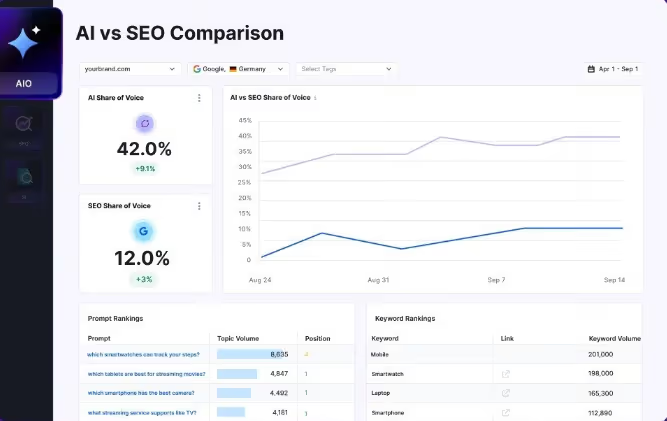
Semrush remains one of the most comprehensive SEO platforms on the market, and has begun layering AI-related visibility signals into its ecosystem.
Key capabilities
- Keyword research and SERP tracking
- Backlink and authority analysis
- Early AI visibility indicators
- Strong reporting for traditional search
Pricing
Semrush doesn’t offer a dedicated tool for GEO, the AI and SEO toolkit starts at 165$/month.
How it compares to Profound
Semrush is not a true Profound alternative for GEO. Its AI features are:
- Add-ons to an SEO-first system
- Limited in prompt-level AI answer analysis
- Focused on Google-first discovery
Semrush excels at ranking pages, not being cited by AI.
Best for
Teams that still rely heavily on SEO and want early signals of AI impact, but not a dedicated GEO platform.
5. Writesonic - Content Creation with SEO+AI Visibility Management
What it does
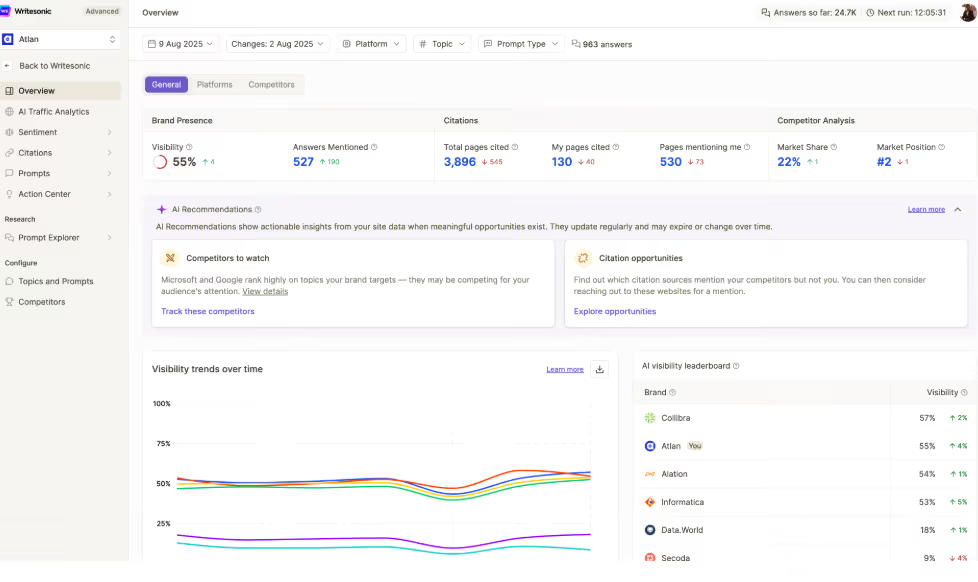
Writesonic started as a SEO and AI writing tool and has expanded into AI visibility tracking.
Key capabilities
- AI visibility management
- Optimized blogs, landing pages, FAQs
- Content optimization for SEO and AI
- Workflow-driven content creation
Pricing
Writesonic doesn’t offer a dedicated GEO platform. The SEO + AI plan starts at 199$/month.
How it compares to Profound
Writesonic approaches AI visibility from a content creation angle, whereas Profound focuses on visibility measurement. Writesonic helps you produce content that might perform in AI answers, but doesn’t deeply measure:
- Prompt coverage gaps
- Entity authority
- Competitive AI share-of-voice
Best for
Content and SEO teams that want to move faster, but not teams looking for rigorous GEO analytics.
6. Scrunch AI - AI Journey & Perception Tracking
Scrunch AI is designed to help marketers understand how their brand is represented across AI assistants. It blends brand perception metrics with visibility tracking across multiple LLMs.
Strength:
Good for understanding the journey of AI visibility and how users engage with brand content.
Limitations:
Scrunch focuses more on narrative mapping and less on providing actionable prompt optimization or entity-centric analysis.
7. Ahrefs Brand Radar - SEO + AI Benchmarking
Ahrefs Brand Radar integrates AI visibility indicators into its broader SEO platform, helping teams understand how often their brand appears in AI-generated responses alongside traditional search performance.
Strength:
Works well for teams already using Ahrefs that want early visibility signals connected to their existing SEO workflows.
Limitations:
AI visibility insights are layered into an SEO-first system and remain high-level. The platform does not provide deep prompt intent analysis, entity interpretation, or cross-model visibility intelligence required for full Generative Engine Optimization.
8. Omnius.so - Monitoring + Workflow Platform
Omnius.so delivers AI search monitoring with workflow capabilities that help teams act on visibility insights and SEO. It tends to focus on monitoring and automated alerts, rather than deep AI analytics.
Strength:
Simple, unified dashboards for prompt and mention tracking alongside existing SEO workflows.
Limitation:
Lacks advanced GEO features like deep prompt interpretation, entity weighting, or competitive modeling.
9. Otterly AI - Brand Mentions Across LLMs
Otterly AI specializes in tracking brand and content citations across major AI search platforms like ChatGPT, Google AI Overviews, Perplexity, and Gemini.
Where it helps:
Easy setup and automated monitoring of brand mentions with sentiment and citation frequency.
Shortcoming:
Primarily a monitoring tool with limited optimization guidance; teams still need separate workflows to act on insights.
10. Surfer AI Tracker - Prompt + SEO Fusion
Surfer AI Tracker extends Surfer’s SEO platform to monitor how often a brand appears for selected prompts across AI-driven search experiences, tying those insights back to content and SEO performance.
Strength:
Supports SEO teams looking to understand how existing content performs in AI-assisted search and content discovery.
Limitations:
Prompt tracking is closely tied to SEO workflows and content optimization. It does not provide entity-level analysis or deep AI visibility intelligence required for full GEO programs.
Quick Comparison Table of Best Profound Alteratives
This table highlights the most important differences across popular AI visibility tools, so you can choose the best alternative to Profound for your needs.
Why BrandRadar.ai Stands Out as the Best Profound Alternative?
All ten of these tools offer value, but they also underscore a broader truth: AI visibility is not the same as traditional search visibility. A complete GEO platform must do more than monitor mentions or generate content. It must interpret how AI models understand entities, contexts, and intents, and give clear, competitive, and strategic recommendations based on that intelligence.
BrandRadar is a full-funnel GEO platform. It shows which prompts trigger your brand, how competitors outperform you, what sentiment AI models assign, and where your entity strength is weak or strong. For marketing decision-makers seeking not just insights, but action, that makes all the difference.
FAQs
1. Is BrandRadar better than Profound for AI visibility?
While Profound offers deeper prompt analytics, BrandRadar offers better competitive benchmarking, recommendations and content generation capabilities along with added SEO services, making it a stronger choice for businesses.
2. Which is the best Profound alternative or AI Visibility in 2026?
BrandRadar.ai is the strongest alternative to Profound for AI visibility, offering deep prompt-level tracking, entity analysis, and competitive insights across AI models
3. Do GEO tools replace traditional SEO?
No, GEO complements SEO by focusing on how AI models surface brands, not just ranking links.
4. What metrics matter for AI visibility?
Prompt frequency, citation count, model weighting, and entity clarity are more predictive than keyword rank alone.
5. Is GEO relevant for mid-sized businesses or only enterprises?
GEO is valuable for any brand competing for visibility in AI-driven search, not just large enterprises, especially as AI becomes a primary discovery channel.
Conclusion: Choosing the Right Profound Alternative
If your goal is to understand and improve how your brand shows up where people actually ask questions, start with experts who'll help your brand from the ground up for AI visibility intelligence. For decision-makers in marketing, that means prioritizing tools with prompt-level insights, entity analysis, and competitive benchmarking. BrandRadar leads this category, but the ecosystem of alternatives offers options for specific needs, whether you want solid SEO integrations, lightweight monitoring, or content optimization support.
In a world where AI increasingly drives discovery, choosing the right GEO strategy is not strategic, it’s essential.
Experience the most strategic AEO tool for business owners, book a demo with BrandRadar.

